Sticky vs. Rotating Proxies: The Ultimate Guide to Choosing the Right Proxy for Your Needs
Seo Za
October 23, 2025
13 minutes
Understanding the Fundamentals: What Are Proxies?
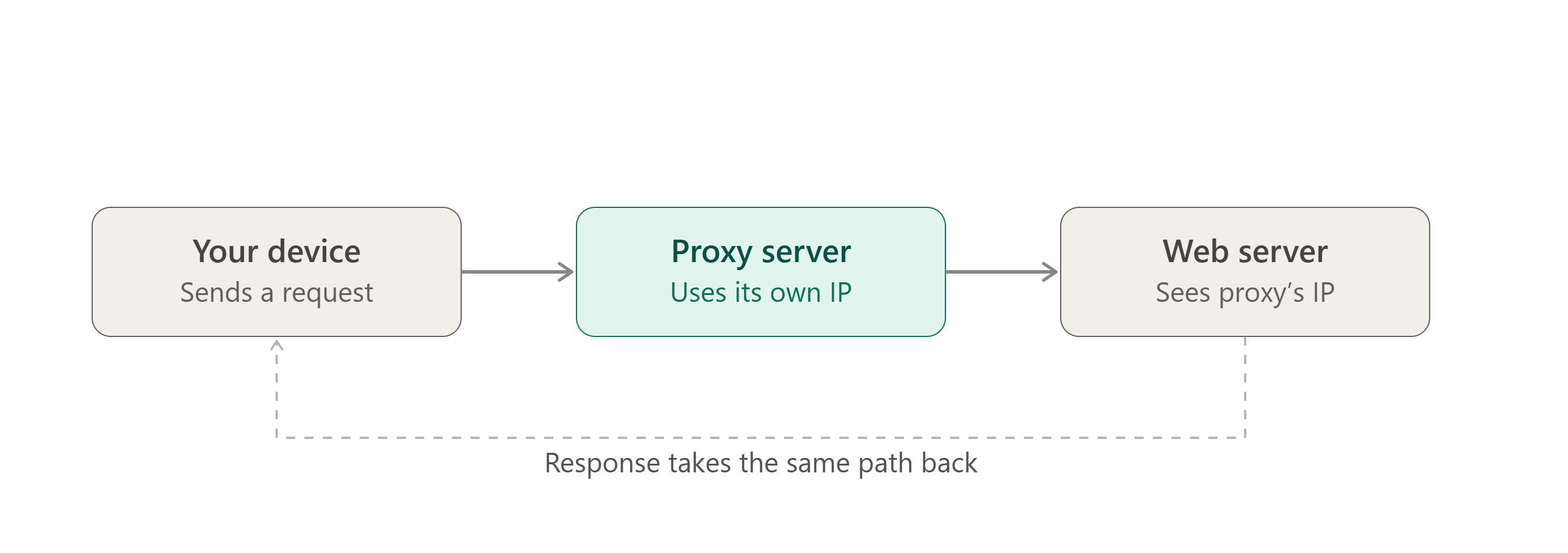
A proxy server is an intermediary that sits between your device and the internet. When you send a request to a website, it first goes to the proxy, which forwards it to the destination using its own IP address. The website communicates back to the proxy, and the proxy relays that information to you—so the end server never sees your device's true IP.
This masks your digital footprint, which is the core mechanism behind a proxy's main benefits: better online privacy and web security. By substituting its own IP for yours, a proxy makes it harder for websites or third parties to track your activity or pin down your physical location. It creates a buffer between your device and the public internet, adding a layer of anonymity to your online interactions and enabling access to geo-restricted content.
With the basic principle out of the way, let's look at how this technology branches into two distinct strategies, starting with proxies built for persistence and consistency.
What are Sticky Proxies? The Power of Persistence
Sticky proxies are proxy servers that let you keep the same IP address for a specific duration, anywhere from a few minutes to an hour. Unlike rotating proxies, which assign a new IP for every connection request, a sticky IP provides a persistent identity for a set "session." This isn't the same as a permanent static proxy—it's a dynamic IP from a large pool that's reserved for your exclusive use for a predefined time, so all your activity during that window appears to come from a single, consistent user.
This kind of consistency is non-negotiable for many tasks. Consider a social media marketer managing five separate Instagram accounts. If their proxy rotates IPs with every action—log in, like, post—the platform's security algorithms will likely flag the activity as suspicious. Using a dedicated sticky session for each account, set to something like 30 minutes, mimics natural user behavior far more closely and helps avoid the kind of account flags that lead to lockouts and workflow interruptions. Common session durations include:
10 minutes
30 minutes
60 minutes
Session until manually changed
Why Mobile Proxies Excel for Sticky Sessions
While many proxy types offer sticky sessions, mobile proxies stand out. They use real IPs from mobile carriers (e.g., AT&T, Vodafone), which platforms tend to trust by default. That authenticity helps them get past filters that block datacenter IPs more easily than most alternatives. For tasks that need the highest level of trust, dedicated sticky mobile proxies are worth considering.
How Sticky Proxies Work: Mechanisms of Consistency
Sticky proxies maintain a consistent exit IP across multiple requests by routing traffic through a gateway called a backconnect server. This server manages a large collection of IP addresses and acts as a single entry point for your connection. The mechanism is essentially a mapping system: when you connect, you're assigned a specific entry point—often a unique port number—which the server links to one exit IP from its inventory.
Typical Request Flow:
Your software sends a request to the backconnect server address using an assigned port (e.g., proxy.provider.com:20001).
The server maps port 20001 to a specific residential IP (e.g., 93.184.216.34) from its available pool.
All subsequent requests you send to port 20001 are consistently routed through that same IP, keeping the session intact.
This relies on the provider's IP pool management to keep the assigned IP reserved and stable for the session's duration. Providers generally use two methods to track and persist sessions:
IP-based sticky sessions: The server ties the session to your machine's public IP address.
Cookie-based sticky sessions: A session ID is embedded in a cookie—a more resilient method that isn't affected by changes to your local IP.
While sticky proxies anchor your digital identity for a set time, rotating proxies do the opposite, embracing constant change for a different set of goals.
What are Rotating Proxies? The Advantage of Anonymity
A rotating proxy is a server that assigns a new IP address from a pool for every connection or at set intervals. This automatic rotation is what makes rotating proxies useful for tasks that need high anonymity and the ability to work around sophisticated anti-bot measures.
For example, a market researcher collecting pricing data from hundreds of e-commerce sites would get blocked quickly if every request came from a single static IP. With a rotating IP, each request appears to come from a different user, so the activity looks more like organic traffic. Mobile proxies work especially well in this kind of pool, since their IPs tend to be trusted and less likely to get flagged.
The main advantages of rotating proxies include:
Enhanced anonymity: Your digital footprint is spread across numerous IPs, which makes it much harder to trace activity back to a single origin.
Bypassing rate limits & blocks: Constantly changing the source IP helps you avoid triggering security rules built around high request volume from one address.
Greater scalability: Enables large-scale web scraping, ad verification, and market research without interruptions from IP-based bans.
The IP pools involved can include datacenter proxies, residential proxies, or mobile IPs, each with different levels of performance and perceived legitimacy.
How Rotating Proxies Work: Mechanisms of Change
Rotating proxies route your connection requests through a gateway server that automatically assigns a new IP address for each request or session. This depends on fairly sophisticated infrastructure to keep connections both seamless and anonymous.
The core component is one or more large IP pools—collections that can hold thousands or even millions of residential or datacenter IPs. A specialized server, the proxy rotator, manages this pool. When you send a request, the rotator intercepts it, selects an unused IP, and assigns it to that single request. This fast request handling means that from the target server's perspective, each connection attempt looks like it's coming from a completely different source.
Simplified rotation flow:
Request 1 → Proxy Rotator → Assigns IP_A from Pool → Target Server Request 2 → Proxy Rotator → Assigns IP_B from Pool → Target Server Request 3 → Proxy Rotator → Assigns IP_C from Pool → Target Server
With both types and the mechanisms behind them covered, a direct comparison helps highlight their core differences in practice.
Sticky vs. Rotating Proxies: Key Differences and Comparison
The core distinction between sticky and rotating proxies is session persistence. A sticky proxy maintains the same IP for a set duration—from a few minutes to over an hour—which matters for tasks that need a stable digital identity. A rotating proxy, by contrast, automatically assigns a new IP from a large pool for every connection request, or on a short, timed interval, which maximizes anonymity. This architectural difference determines which type suits a given objective, and it directly affects IP stability and how well the operation holds up.
Key differences between sticky and rotating proxies:
Feature
Sticky Proxies
Rotating Proxies
IP Consistency
Maintains the same IP for a set duration (e.g., 10-60 minutes).
Changes IP with each request or at short, random intervals.
Anonymity Level
Moderate (consistent IP can be tracked over time).
High (constantly changing IPs makes tracking difficult).
Large-scale data collection, bypassing rate limits, highly anonymous browsing.
Likelihood of Blocks
Higher if IP is used excessively within its sticky duration.
Lower due to frequent IP changes, especially when using diverse IP pools like mobile.
Typical IP Sources
Residential, sometimes static datacenter.
Residential, datacenter, mobile.
Pricing Model (Common)
Often by IP or duration.
Often by bandwidth or number of requests.
The table gets at the underlying trade-off: anonymity at scale versus session continuity. Managing a business account calls for a sticky IP to maintain a consistent session and avoid security flags—frequent IP changes look suspicious there. A web scraping job targeting thousands of pages, on the other hand, needs rotation to spread requests across many IPs and avoid rate limits and blocks. Neither approach is universally better. This is where mobile proxies become particularly useful: mobile IPs are generally trusted and offer naturally long sticky sessions that reflect real user behavior, while also giving access to large, carrier-managed IP pools well suited to high-performance rotation—bridging the gap between stability and anonymity. Their flexible pricing models often make them a solid fit for tasks that need a bit of both.
The comparison table gives a technical overview, but the real question is when to use one over the other. Let's start with the scenarios where a sticky proxy isn't just useful, but close to essential.
When to Choose Sticky Proxies: Ideal Use Cases
A sticky proxy is generally the right choice for any automated task involving a multi-step process on a stateful platform. Using the wrong proxy type here isn't a minor technical slip—it can be a real design flaw with real consequences.
The Cost of Using Rotating Proxies for Session-Based Tasks
The mistake: Deploying a rotating IP for session-dependent workflows, such as managing a user account or completing a multi-page checkout.
The motivation: Usually a one-size-fits-all approach, where a general rotating proxy pool gets applied to every task for the sake of simplicity.
The cost: This tends to add up quickly. In an e-commerce checkout, an IP change mid-process can invalidate the session, emptying the cart and costing the sale. For account management, a platform's security systems often flag repeated IP changes as suspicious, which can lead to CAPTCHAs, temporary locks, and eventually permanent bans—turning what looked like a shortcut into an operational failure.
Sticky proxies address this by keeping a consistent IP for a set duration, which matters most in cases like these.
Social Media and Account Management
Platforms build a trust score based on consistent user behavior, and a stable IP is part of that. Managing ten corporate accounts, for instance, works best when each one has a consistent IP address for every session, so it appears as a legitimate, distinct user—IP rotation here tends to signal automation and can trigger bans. This makes session persistence important for serious social media management. For this kind of work, mobile residential proxies—using the IP of a real mobile device—tend to offer a higher level of trust and lower detection risk.
E-Commerce and High-Stakes Checkouts
Most e-commerce checkout flows are stateful, tying session data to your IP. Picture a high-demand sneaker drop: you add the item to your cart, move to shipping, then to payment. If your IP changes between steps, the server may no longer recognize your session, and the cart empties. A sticky proxy keeps the same IP throughout the whole checkout, preserving session integrity—which matters a lot for high-demand e-commerce activity.
Ad Verification and Localized Content
Accurate ad verification depends on geographic consistency. To confirm a geo-targeted ad displays correctly in Dallas, the whole session needs to originate from a Dallas IP—if the proxy rotates to a Chicago IP mid-test, the data becomes useless. A sticky proxy locks in the perceived location so the test stays valid from start to finish.
In contrast to tasks that need session integrity, there's a whole category of work where consistency is actually a liability—large-scale, automated tasks where the advantage lies in anonymity and rotation.
When to Choose Rotating Proxies: Anonymity at Scale
Choose rotating proxies when the goal is anonymity, scale, and avoiding detection during automated data collection. If a task involves sending thousands of requests to a single domain, a static IP will get rate-limited or blocked fairly quickly. Rotating proxies solve this by assigning a new IP for each connection from a large pool, spreading the footprint so it looks like organic traffic from many different users.
High-Volume Web Scraping & Data Mining
For high-frequency tasks, rotating proxies are close to essential. Picture an e-commerce intelligence firm aggregating competitor pricing from 100 different retailers every hour—with a static IP, their scrapers would likely be blocked within minutes. Rotating proxies route each request through a different IP, which helps prevent blocks and keeps data collection going. This is central to successful large-scale web scraping and data mining work.
Market Research & Ad Verification
To check how an app, website, or ad appears from different global locations, rotating proxies are a natural fit. A business can use geo-targeted rotating proxies to check local pricing, ad placements, and search results as if browsing from a specific country or city. This is one of the more reliable ways to run international market research and confirm global ad campaigns are being served correctly, without cloaking or redirection.
Bypassing Aggressive Anti-Bot Systems
One of the strongest reasons to use rotating proxies is getting past sophisticated anti-bot measures. Modern systems analyze traffic patterns and IP reputation, not just request volume, which is where mobile rotating proxies offer a real advantage. A diverse pool of authentic mobile IPs, tied to real carrier networks, tends to be far less likely to get flagged than datacenter IPs, which are often blacklisted preemptively. For data-intensive work against well-protected targets, mobile proxies can make requests much harder to distinguish from real user traffic.
The choice between sticky and rotating is the main fork in the road, but a solid setup also means looking closely at the quality and type of IP address being used.
Choosing the Best Proxy: Factors to Consider Beyond Sticky vs. Rotating
Choosing a good proxy service means looking beyond session control. The main things worth weighing are the IP source, network scale, performance metrics, and support quality. Getting any of these wrong can undermine the whole operation.
Proxy type: The source of the IP dictates its authenticity and trust level. Datacenter proxies are fast but easily detected. Residential proxies are more legitimate, though top-tier targets have started flagging them too. ISP proxies offer a static, higher-trust alternative. Mobile proxies, using IPs assigned by real carriers, tend to represent the highest level of legitimacy and are generally the hardest to block.
IP pool and geographic locations: A large, diverse pool is important—it provides the variation needed to avoid IP-based blocks. Being able to target specific locations, down to a city or carrier level, matters for accessing geo-restricted content and testing localized experiences.
Speed and reliability: Good speed and dependable uptime are both essential—slow or failing proxies will bottleneck data collection and lead to incomplete or corrupted results.
Customer support & pricing: Look at the technical competence of the support team, since they're your first line of defense when troubleshooting, and make sure the pricing model fits your project's data consumption and concurrency needs.
Weighed against these factors, good mobile proxies tend to perform well, drawing on some of the more trusted IP sources available and generally minimizing blocks. If your project needs a high level of reliability and authenticity, it may be worth looking at proxies built for that purpose.
The Mobile Proxy Advantage: Why Mobile IPs Stand Out
The core trade-off with mobile proxies is fairly straightforward: greater authenticity comes with higher cost and more network complexity. Their main advantage comes from using real IPs assigned by mobile carriers, which gives them inherently higher trust and makes their traffic harder to distinguish from an actual mobile phone user.
Consider scraping a heavily protected e-commerce site. A datacenter proxy is likely to get flagged and banned quickly—by the company's own published comparison, datacenter IPs see block rates in the 30-50% range, versus under 1% for mobile IPs. Switching to a mobile proxy with authentic IPs and genuine geo-locations tends to shift outcomes substantially in that direction, since each request looks like a legitimate user. The trade-off is a higher price point than datacenter IPs, which comes with the territory of accessing carrier IP ranges.
Our Mobile Proxy Service: Combining the strengths of sticky and rotating proxies with strong authenticity.
Making the Right Choice for Your Operations
The choice between sticky and rotating proxies really comes down to what you're trying to do. If your task needs a consistent digital identity across multiple steps, go with a sticky proxy. If it prioritizes anonymity, scale, and avoiding detection during high-volume requests, go with a rotating one.
That said, the real world rarely offers such a clean choice. Many operations need a blend of both consistency and anonymity, which is where good mobile proxies really earn their keep. By offering authentic IPs from trusted mobile carriers, they provide the session stability of a real user for sticky tasks, plus access to a large, dynamic IP pool for large-scale rotation. A versatile mobile proxy service is worth considering if you need a setup flexible enough to handle both sides of that trade-off.