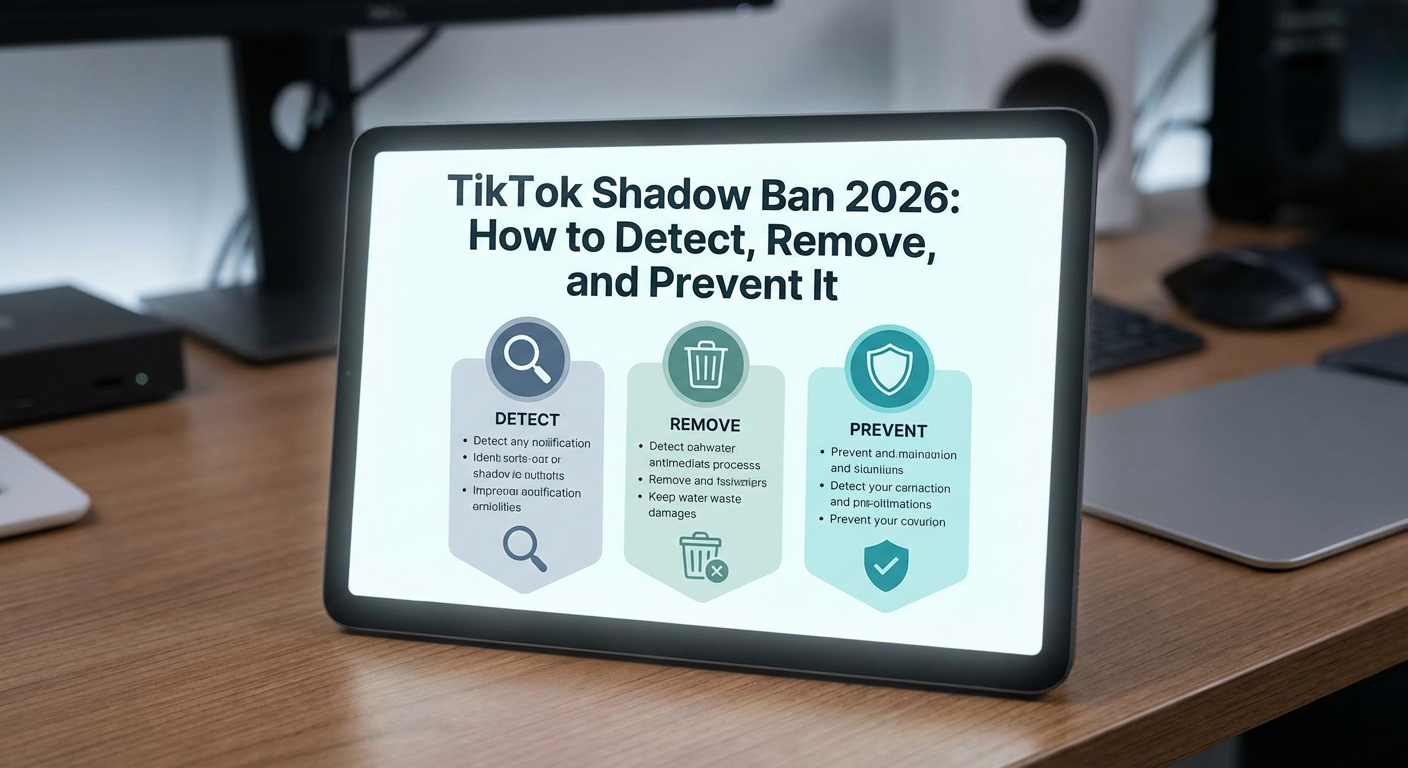
A TikTok shadow ban is a temporary, unannounced restriction that can decimate your TikTok reach. For social media managers and content creators, this invisible throttling is a critical threat. This guide provides a comprehensive, step-by-step approach to detecting, recovering from, and preventing TikTok shadow bans. We'll explore the algorithm's warning signs, systematic recovery methods, and best practices for safeguarding your presence. By understanding TikTok's enforcement mechanisms, you can protect your account and ensure sustained growth. If you suspect a TikTok shadow ban, act quickly. A TikTok shadow ban can last from 3 to 14 days, but with the right protocol, you can recover. This article is your ultimate resource for TikTok shadow ban detection and removal. Don't let a TikTok shadow ban derail your success.
What Is a TikTok Shadow Ban?
Imagine this: You post a seemingly solid TikTok video. Views stall at 200. Your usual 5% engagement rate plummets to 0.5%. You check your analytics, but nothing explains the sudden, silent drop. This isn't a content fluke—it's the classic symptom of a TikTok shadow ban.
A shadow ban (or shadowban) is TikTok's way of quietly limiting your content's visibility without notification. The TikTok algorithm deprioritizes your videos, causing a severe engagement drop. For businesses and influencers, this invisible throttling is a critical threat to growth and revenue, making self-diagnosis essential.
This article cuts through the noise. We'll dissect the real causes, provide a definitive self-diagnosis framework, and deliver actionable steps to restore your reach.
Typical Shadowban Duration: 3–14 days
Now that we've defined what a TikTok shadow ban is and its typical symptoms, it's essential to distinguish it from other, more severe restrictions.
TikTok Shadow Ban vs. Full Ban: Key Differences
A TikTok shadow ban is an algorithmic restriction that quietly limits your content visibility without an official account suspension. Unlike a full ban, your account remains active, but TikTok's system deprioritizes your videos across key discovery channels.
- Shadow Ban: A temporary, unannounced reduction in content distribution. Your posts don't appear on the For You page, hashtag feeds, or search results as they normally would.
- Full Ban: A permanent removal of your account for severe policy violations. You cannot log in or post.
This restriction is driven by TikTok's algorithm, automatically triggered by patterns such as policy violations (e.g., copyright strikes, hate speech) or suspicious behavior (e.g., sudden engagement spikes, bot-like activity).
The impact is a severe drop in reach across critical channels:
Reach Channels Affected by Shadow Ban
Reach Channel | Normal Distribution | Under Shadow Ban |
|---|
For You page | Videos widely recommended | Recommendations cease |
Hashtag searches | Posts appear in top results | Posts buried or hidden |
Search results | Content indexed and visible | Content deprioritized |
Because TikTok doesn't notify you, identifying a TikTok shadow ban requires self-diagnosis through analytics monitoring.
With a clear understanding of the difference, the next step is to learn how to diagnose a TikTok shadow ban, since TikTok does not provide official notifications.
How to Diagnose a TikTok Shadow Ban
TikTok provides no official notification for a shadow ban. Diagnosis relies on recognizing symptoms and conducting manual tests. This section covers both approaches, starting with objective metrics from TikTok Analytics and moving to hands-on verification methods.
Key Symptoms to Monitor
Track these four metrics in your TikTok Analytics dashboard. A simultaneous drop across multiple indicators is a strong signal.
Engagement Metrics Before and After Shadow Ban
Metric | Healthy Account | Shadow Banned |
|---|
View Count | 10k–50k+ per video | Stalls under 500 |
Engagement Rate | 3–10%+ | Falls below 2% |
Comments/Shares/Reposts | Steady volume | Sharp decline |
Follower Growth | Consistent net gain | Stagnates or drops |
DIY Tests to Confirm a Shadow Ban
Combine symptom data with these manual verification steps. Avoid unreliable third-party tools—they lack access to TikTok's internal ranking signals.
- Hashtag Test: Post a video using a unique, low-competition hashtag (e.g., #myuniquetest123). From a non-follower's account, search that exact hashtag. If your video doesn't appear in recent results, your hashtag reach is restricted.
- Secondary Account Method: Use a fresh TikTok account to browse the For You page and relevant hashtags. If your recent videos are absent while others appear, your visibility is suppressed.
- Analytics Deep Dive: In TikTok Analytics, check the "Traffic Sources" graph. A sudden shift to 80%+ "Profile" traffic (viewers coming only from your profile) indicates your content is no longer being recommended by the algorithm. For interpreting these metrics correctly, consult our TikTok Analytics guide.
Warning: No external shadow ban checker can access TikTok's private algorithm. Manual tests are the only reliable test for shadow ban.
Once you've confirmed a TikTok shadow ban, identifying the root cause is critical for effective recovery.
Common Causes of TikTok Shadow Bans
Understanding the root cause of a shadow ban is critical for recovery. TikTok's algorithm penalizes accounts that trigger its automated safeguards. The four most frequent catalysts are:
- Violating TikTok Community Guidelines: The primary trigger. This includes shocking content, nudity, hate speech, harassment, misinformation, or copyrighted material. Example: Posting a video with copyrighted music without a proper license can result in an immediate algorithmic restriction. The violation is often subtle—a background track or a snippet of a movie clip.
- Posting unoriginal content or low-quality material: TikTok prioritizes unique, native content. Re-uploading viral videos with visible watermarks (from Instagram, YouTube), posting low-effort GIFs, or creating repetitive, low-value content signals spammy behavior. Example: A creator downloads a popular TikTok video, crops it slightly, and reposts it without any original commentary or transformation. The algorithm detects this duplication and suppresses reach.
- Engaging in bot activity or artificial growth tactics: Unnatural engagement patterns are a major red flag. This includes mass-following/unfollowing, using bots to deliver identical comments, or purchasing fake likes/views. Example: A third-party app is used to auto-comment "Great!" on hundreds of videos in an hour. The sudden, non-human engagement spike flags the account for inauthentic behavior.
- Falling victim to automated moderation errors (false positives): TikTok's AI systems aren't perfect. They can mistakenly flag legitimate content. Educational material might be labeled misinformation; art could be misclassified as nudity. Example: A historian posts a short documentary clip containing historical war footage. The AI, trained on modern policy violations, incorrectly flags it for violent content, resulting in a false positive shadow ban.
Key Insight: These triggers are often interlinked. For instance, using bot activity to boost unoriginal content compounds the violation, leading to a longer restriction period.
Knowing the cause helps set expectations for the duration of your TikTok shadow ban.
How Long Does a TikTok Shadow Ban Last?
A TikTok shadow ban's duration is not fixed—it scales with violation severity and your account's history. There is no official countdown; you must infer progress from symptom reduction. Typical ranges are categorized as follows:
Shadow Ban Duration by Violation Severity
Violation Type | Typical Duration | Example |
|---|
Minor violation | 3–5 days | Accidental use of a copyrighted sound in a single video. |
Moderate violation | 7–10 days | Repeated posting of borderline content that skirts community guidelines. |
Serious violation | 14+ days | Hate speech, severe misinformation, or nudity. |
Systematic violation | Indefinite (may lead to full ban) | Coordinated spam, bot networks, or large-scale policy evasion. |
Repeat offenses reset and extend the timer—a second minor violation within 30 days may trigger a moderate penalty. Systematic violations often result in indefinite suppression or a permanent account termination. Crucially, there is no instant fix. Recovery requires you to first cease the violating activity, then wait for TikTok's algorithm to gradually re-assess and restore your standing. Patience is not optional; it is part of the penalty.
Now that you understand the timeline, let's dive into the systematic recovery process for a TikTok shadow ban.
Step-by-Step Recovery Guide
To remove a shadow ban and get your account back on track, follow this ordered recovery plan. Patience is essential; there are no instant fixes. Execute each step completely before proceeding.
Step 1: Audit and Remove Problematic Content
Audit your last 30 days of videos. Delete any with:
- Third-party copyrighted audio
- Banned hashtags (e.g., #fyp)
- Excessive profanity or sensitive topics
- Low-quality clips or watermarked re-uploads
Removing the source violation stops further penalties. When in doubt, delete—false positives are safer than ongoing restrictions.
Step 2: Take a Posting Break
Halt all activity—posting, liking, commenting, following—for 48–72 hours. This resets algorithmic suspicion and stops new spam signals.
Warning: Do not mass-engage during this break; it worsens the ban.
Step 3: Clear Cache and Reinstall TikTok
On iOS: Settings > General > iPhone Storage > TikTok > Delete App (clears cache), then reinstall.
On Android: Settings > Apps > TikTok > Storage > Clear Cache, then reinstall.
Note: If the ban is device-based (fingerprinting from multi-accounting), cache clearing may not help. Use a different device or factory reset.
Step 4: Avoid Controversial Content During Recovery
Strictly avoid until full recovery:
- Profanity
- Sexually suggestive material
- Violence
- Misinformation
- Hate speech
- Regulated goods (alcohol, tobacco)
Any new violation resets the timer. TikTok's AI is hypersensitive—assume every post is under extra scrutiny.
Step 5: Switch Device or Network if Needed
If all accounts on your device are affected (device ban):
- Switch to a different smartphone/tablet
- Factory reset your current device
- Use an anti-detect browser with residential proxy to mask fingerprints
Avoid standard VPNs—sudden IP changes trigger flags. For stable IPs, use residential proxies.
Navigate: Profile > Menu > Settings and Privacy > Report a Problem > Account Issue. Send a concise appeal:
Shadow ban appeal for [username]. I removed violating content and took a 72-hour break on [date]. Please review my account.
This creates a record but offers no guarantee.
Step 7: Rebuild with High-Quality, Original Content
Post only original, engaging content:
- Prioritize watch time (15–60 second videos)
- Use trending sounds appropriately
- Post consistently (1–3 times daily)
- Engage genuinely with comments
Example: Create your own twist on trends instead of re-uploading viral videos. Monitor analytics weekly for early warning signs.
Recovery is only half the battle; prevention is key to avoiding future TikTok shadow bans.
Prevention: How to Avoid a TikTok Shadow Ban
Prevention is the only reliable strategy. To avoid a shadow ban, adopt these eight operational guardrails. Treat them as non-negotiable hygiene, not optional best practices.
- Stay Aligned with TikTok Community Guidelines
Guidelines evolve. Bookmark the official page and review it quarterly. Why it matters: Minor violations compound; context matters—excessive profanity triggers even if individual words are borderline. - Engage Like a Real User
Avoid bot behavior: no mass-following (>20/day), identical comments, or automated likes. Instead, reply personally to comments and follow only accounts you genuinely engage with.
Safe vs. Risky Engagement Patterns
Safe Engagement | Risky Behavior (Triggers Shadow Ban) |
|---|
Reply to 5–10 comments per video with personalized responses. | Follow 500 accounts in one hour. |
Like videos you actually watch (≤100/day). | Use bots to auto-comment "Nice!" on hundreds of videos. |
Share videos with a specific friend or group. | Mass-share the same video to dozens of contacts. |
- Vet Your Content Before Posting
Use this content review checklist: - Is all audio from TikTok's licensed library?
- No watermarks from Instagram/YouTube?
- No rapid flashing or strobe effects?
- No copyrighted material (movies, TV clips)?
- Master Hashtag Strategy
Use 3–5 relevant hashtags per video. Avoid banned hashtags: #fyp, #foryou, #foryoupage, #viral are often suppressed. Use niche tags and one safe, trending tag. Create a branded hashtag for your community.
Commonly Shadowbanned Hashtags: #fyp, #foryou, #foryoupage, #viral, #trending, #followforfollow, #likeforlike.
- Post with Natural Patterns
Maintain 1–3 posts daily, spaced 3–4 hours apart. Never post in bursts (e.g., 10 videos in one hour). Example schedule: 9 AM, 1 PM, 6 PM. Avoid automated scheduling tools that mimic bot behavior. - Use Professional Tools for Multi-Account Management
For multi-account management, the same device/IP links accounts. Anti-detect browsers (e.g., Multilogin, Octo Browser) isolate each account with unique fingerprint isolation and dedicated proxies. They prevent device fingerprinting from linking your accounts.
Key Concept: TikTok fingerprints your device (browser type, screen size, installed fonts). Without isolation, managing multiple accounts from one device triggers automated bans.
- Build Account Trust Gradually
New account warm-up: Days 1–2: only browse, like, comment as a normal user. Day 3: first post (1 video). Existing accounts must avoid sudden content shifts or activity spikes. Organic growth beats rapid hockey-stick curves. - Monitor TikTok Updates
Algorithm and policy changes are frequent. Follow official creator accounts (@TikTokCreator) and trusted industry blogs. Test new features cautiously; regional enforcement varies.
For teams and agencies, managing multiple accounts introduces additional risks that require special consideration to prevent TikTok shadow bans.
Managing Multiple TikTok Accounts Safely
TikTok automatically links multiple accounts originating from the same source using a combination of device fingerprint, IP address, behavioral patterns, and content overlap. This account linking is a primary trigger for multiple TikTok accounts managed from one device to be simultaneously restricted. Amateur workarounds like simple app cloners fail because they do not mask the underlying device fingerprint.
The following table compares methods for safely managing multiple accounts.
Comparison of Multi-Account Management Methods
Method | How It Works | Risk Level | Recommendation |
|---|
Separate Devices | Each account uses a physically unique smartphone/tablet. | Low | Most secure but costly; viable for 2-3 accounts. |
Factory Reset Between Accounts | Wipe the device completely before creating/using a new account. | Medium | Time-intensive; effective for occasional use but impractical for scale. |
Simple App Cloners | Use parallel space apps to duplicate the TikTok app. | High | Avoid. Leaves core device fingerprint intact; easily detected. |
Anti-Detect Browser + Residential Proxy | Browser creates a unique, spoofed fingerprint per session. Residential proxy provides a legitimate, rotating IP address tied to a real ISP. | Low (if configured correctly) | Professional standard for agencies. Isolates fingerprints and masks IP. See our detailed multi-account management guide. |
For anyone managing more than two accounts, investing in a professional anti-detect browser with integrated residential proxy support is not optional—it is the only scalable method that reliably prevents account linking and subsequent shadow bans. The core trade-off is cost versus operational security; free or cheap solutions invariably sacrifice the necessary fingerprint isolation.
To fully grasp TikTok's enforcement landscape, it's helpful to compare a TikTok shadow ban with other restriction types.
Types of TikTok Restrictions
TikTok enforces multiple restriction types, each with distinct operational characteristics:
Comparison of TikTok Restriction Types
Type | Notification | Duration | Impact | Recovery |
|---|
Shadow Ban | None | 3–14+ days | Content visibility suppressed across For You, hashtags, search. | Passive: cease violations, wait for algorithm reset. |
Full Ban | Yes (email/app) | Permanent | Account suspended; cannot log in or post. | Active: formal appeal process via TikTok Support. |
Content Restriction | Yes (per video) | Until edited/removed | Individual video removed or muted. | Active: edit video (e.g., replace audio) or delete. |
Device Ban | None | Indefinite | All accounts from the device are restricted. | Active: switch device or factory reset. |
Understanding which type of TikTok restriction you face determines the correct recovery path. A shadow ban vs full ban distinction is critical: one is a silent throttle, the other is a complete lockout.
Knowing the types of restrictions is useful, but understanding how TikTok detects violations can help you avoid TikTok shadow bans.
How TikTok Detects Violations
TikTok's violation detection relies on five key technical methods. Recognizing these patterns is essential for avoiding shadow bans and account restrictions.
1. Behavioral Pattern Analysis
TikTok monitors your in-app behavior—scroll speed, watch time, engagement timing—for bot-like patterns. For example, liking 200 videos in 5 minutes versus 10 over 30 minutes raises immediate flags. Normal human interaction shows variable intervals and limited engagement bursts.
2. Content Analysis
AI performs comprehensive content analysis: frame-by-frame video scanning, audio transcription for prohibited words, text overlay inspection, and facial recognition for restricted substances or dangerous acts. Every upload undergoes this multi-modal scan.
3. Network Analysis
Network analysis examines IP address, geolocation, and network type (WiFi vs. mobile). Multiple accounts from the same IP or frequent IP changes (common with VPNs) trigger suspicion. Residential proxies provide stable IPs that appear legitimate.
4. Device Fingerprinting
Device fingerprinting collects hardware and software attributes: device model, OS version, screen resolution, installed fonts, battery level, sensors, and installed apps. This creates a unique identifier. Simple app cloners fail because they don't mask all parameters, allowing TikTok to link accounts.
5. Account Relationships
Account relationships are established through shared emails/phones, similar content patterns, cross-interactions (same accounts engaging), or team connections in TikTok Studio. Multi-account managers risk mass penalties if one linked account violates.
Despite the technical details, many creators operate under misconceptions about TikTok shadow bans that can hinder recovery.
Debunking Myths and FAQs
Misconceptions about shadow bans cause costly mistakes and prolonged recovery. Debunking these myths is essential for effective management.
Myth 1: Shadow Bans Are Permanent
Myth: Once restricted, your account is permanently throttled.
Fact: Most shadow bans are temporary, lasting 3–14 days. The algorithm imposes a timeout for corrective action. Only systematic, repeated violations lead to extended restrictions. If you've addressed the cause, wait at least 2 weeks before assuming permanence.
Myth 2: Only Small or New Accounts Get Shadow Banned
Myth: Only small or new creators face shadow bans.
Fact: Any account, regardless of size, can be restricted. Large influencers with millions of followers are frequently shadow banned for policy violations, especially around controversial content. TikTok's systems treat all accounts equally based on behavior, not follower count.
Myth: Employing proxies or multi-accounting tools automatically triggers a ban.
Fact: TikTok analyzes behavior, not the tool itself. Amateur solutions (free VPNs, simple app cloners) cause suspicious patterns like IP jumps or incomplete fingerprint masking. Professional anti-detect browsers with residential proxies reduce risk by isolating fingerprints and mimicking genuine user activity. The tool is neutral; implementation determines outcome.
Myth 4: Deleting and Re-uploading Videos Solves the Problem
Myth: Removing a flagged video and re-uploading it (even edited) lifts the ban.
Fact: This is interpreted as an attempt to circumvent the system and often extends the penalty. TikTok's AI detects duplicate content. Example: A user deleted a video with copyrighted music and re-uploaded it with a different soundtrack; the system recognized the similarity and prolonged the shadow ban.
Conclusion
A TikTok shadow ban is a serious visibility restriction, but it is recoverable if you follow the correct protocol. Success requires understanding TikTok's detection systems—behavioral analysis, device fingerprinting, and account relationships—and strictly adhering to Community Guidelines. For teams managing multiple accounts, professional isolation tools (anti-detect browsers with residential proxies) are non-negotiable to prevent linking. Proactively monitor your TikTok Analytics; a sustained engagement drop is your earliest warning signal. Adapt your content strategy based on these insights. Consistent, authentic engagement and original content are the foundation of lasting prevention. Bookmark this guide for future reference and share it with your team to ensure collective vigilance.














 Deutsch
  Español
  Français
  Bahasa Indonesia
  Polski
  Português
  Русский
  Українська
  简体中文
简体中文